
Home / Ayahuasca Blog / Is Ayahuasca Legal?
Written by the team at Mai Niti Healing Center, a Shipibo family-run center in the Peruvian Amazon.
Last reviewed: October 2026 · This page explains the law in general terms. It isn't legal advice.

For most people, no. Ayahuasca contains DMT, which is a controlled drug in all three countries. In the UK it's treated as a Class A drug with no religious exception. In the US and Canada, it's illegal except for a small number of churches that hold specific federal exemptions to use it as a sacrament. In Peru, by contrast, traditional ayahuasca use is legal and recognised as part of the country's cultural heritage, which is a big part of why people travel there to drink it.
We're writing this from Peru, where sitting in ceremony is legal. If you're thinking of travelling to us from the US, UK or Canada, though, it's worth being clear about the law back home, both for your own peace of mind and so you don't make a costly mistake on the way back.
That's the headline. The detail is where it gets interesting, and where most of the confusion online comes from. You'll hear that "the vine is legal," that "some states have decriminalised it," or that "a church can make it legal." Each of those has some truth in it, and each is easy to misread.
Ayahuasca itself isn't usually named in drug laws. The issue is what's in it.
The brew is traditionally made from two plants: the Banisteriopsis caapi vine and the leaves of Psychotria viridis (chacruna). The leaves contain DMT (N,N-dimethyltryptamine), a psychedelic compound that's controlled under the 1971 UN Convention on Psychotropic Substances and under the national laws of the US, UK and Canada. The vine contains harmala alkaloids, which make the DMT active when you drink it.
So when a court or a customs officer looks at ayahuasca, they generally see a preparation containing DMT. That's what puts it in the same legal category as DMT itself.
Interestingly, the UN body that oversees the convention has said that plants containing DMT aren't themselves controlled under it. That leaves each country free to decide how to treat plant brews. The US, UK and Canada have all treated ayahuasca as a controlled preparation. Peru and a handful of other South American countries have gone the other way.
No, not for the general public. DMT is a Schedule I substance under the federal Controlled Substances Act, which means possessing, importing, preparing or serving ayahuasca is a federal offence. The only legal route is a religious exemption under the Religious Freedom Restoration Act (RFRA), and only a few churches have one.
The US story turns on two court cases and, more recently, a DEA petition process.
In Gonzales v. O Centro Espírita Beneficente União do Vegetal, the US Supreme Court ruled unanimously that the government hadn't shown a compelling reason to stop the UDV's sacramental use of ayahuasca (which they call hoasca). The UDV now imports and uses it under DEA oversight.
In Church of the Holy Light of the Queen v. Mukasey, a federal court protected the sacramental use of ayahuasca (Daime) by Santo Daime churches in Oregon, under conditions including inventory tracking and DEA rules.
This Arizona church reached a settlement with the federal government allowing it to import and use ayahuasca, with anti-diversion conditions and DEA oversight of imports.
This church, based in Washington State, was granted an exemption through the DEA's own petition process, without going to court. It was widely reported as the first ayahuasca exemption granted that way.
Two things are worth being clear about. First, these exemptions belong to the specific organisations that hold them, for their religious ceremonies. They don't make ayahuasca legal for anyone else, and they don't cover a retreat simply calling itself a church. Second, plenty of groups have tried and failed. Courts look closely at whether a religious belief is sincere, and the DEA's petition process is slow and demanding.
You may have read that ayahuasca is "legal in Colorado" or "decriminalised in Oakland." Here's what that actually means.
And in every case, federal law still applies. A state or city measure can't override the federal Controlled Substances Act.
Banisteriopsis caapi and Psychotria viridis aren't listed as controlled substances in the US, and they're sold openly as plants or botanical material. The legal problem starts when they're prepared into a DMT-containing brew intended for drinking.
Possessing a Schedule I substance is a federal offence, and supplying, importing or manufacturing one carries much heavier penalties. In practice, prosecutions involving ayahuasca have been rare, but "rarely prosecuted" isn't the same as legal, and the risk falls on the person or group holding or serving it.
No. In the UK, DMT is a Class A drug under the Misuse of Drugs Act 1971, the most serious category. Ayahuasca is treated as a preparation containing DMT, so it's Class A too. There's no religious exemption.
The UK has tested this in court. In R v Aziz (2012), a practitioner who had served ayahuasca argued that his right to religious freedom under Article 9 of the European Convention on Human Rights protected him. The Court of Appeal disagreed. Its reasoning, in short, was that a religious setting doesn't make an otherwise unlawful act lawful.
There was also a well-known case in 2010, when members of a Santo Daime church in the UK were arrested and ayahuasca was seized. The prosecution was later dropped, but that was for evidential reasons, not because the brew was found to be legal.
Even if someone argued that a particular brew didn't count as a DMT preparation, the Psychoactive Substances Act 2016 bans supplying, producing and importing almost any substance that affects the mind, with exceptions for things like alcohol, caffeine and medicines. Simple possession isn't an offence under that Act, but serving or importing ayahuasca would be.
For Class A drugs, the maximum sentence is up to seven years for possession and life for supply, production or importation. Those are maximums, not typical sentences, but they show how seriously the law treats it.
The Misuse of Drugs Act applies across the UK, so DMT and ayahuasca are Class A everywhere. Scotland and Northern Ireland have their own courts, but there's nothing to suggest the position is any different there.
No, except for a few religious groups with federal exemptions. Canada controls DMT under Schedule III of the Controlled Drugs and Substances Act. Unusually, Canada also lists harmaline and harmalol, two of the alkaloids found in the ayahuasca vine.
Canada doesn't have an equivalent of the US RFRA. Instead, Health Canada can grant an exemption under section 56 of the Act for medical, scientific or public-interest reasons. It has used this to allow a small number of religious groups to import and use ayahuasca in ceremonies:
As in the US, these exemptions apply to those organisations and their ceremonies only.
The ayahuasca plants aren't specifically listed, so the dried vine or leaves aren't controlled in themselves. Preparing a brew from them, or possessing or sharing one, can be treated as an offence involving a controlled substance.
For Schedule III substances, simple possession can carry up to three years in prison on indictment, with lower maximums for summary offences. Importing ayahuasca is treated far more seriously, as trafficking in a controlled substance.
| United States | United Kingdom | Canada | Peru | |
|---|---|---|---|---|
| Is it legal? | No, except approved religious groups | No | No, except approved religious groups | Yes, for traditional use |
| How DMT is classified | Schedule I (federal) | Class A | Schedule III | Not controlled in traditional use |
| Religious exemptions | Yes, a small number (UDV, Santo Daime, and others) | None | Yes, a small number (Santo Daime, UDV) | Not needed |
| Local decriminalisation | Colorado and some cities, with federal law still applying | None | None | Not applicable |
| Plants on their own | Not controlled | Brew treated as Class A preparation | Not specifically controlled | Legal |
| Importing ayahuasca | Illegal without DEA authority | Illegal | Illegal without an exemption | Export not advised |
In Peru, traditional ayahuasca use is legal and protected. In 2008, Peru's National Institute of Culture declared the traditional knowledge and use of ayahuasca by Amazonian communities part of the National Cultural Heritage of Peru. The declaration recognised ayahuasca as part of Indigenous medicine and identity, and it drew a line between traditional practice and purely commercial use.
That's why so many people from the US, UK and Canada travel to the Peruvian Amazon to sit in ceremony at a retreat center. They can sit in ceremony legally, with healers working in the tradition the plant comes from, rather than relying on an underground ceremony at home where there's no legal framework, no oversight and no recourse if something goes wrong.
The Shipibo-Conibo people, whose homeland is along the Ucayali River in the Peruvian Amazon, are one of the communities most closely associated with ayahuasca healing. That's the tradition Mai Niti comes from.
For Maestra Lucila's family, ayahuasca has never been a legal question.
It's part of a healing lineage passed down through generations in their village of San Francisco, near Pucallpa. Her brother Mishako first sat with the medicine at 15, following the path their grandparents had walked through long periods of learning and dieta. You can read more about our family and hear Lucila answer guests' questions in her own words on Answers with Lucila.
Peru doesn't run a licensing system for retreat centers. Quality and safety vary a lot, so it's worth looking closely at who's running a center, how they screen guests and what support is in place.
Carrying it back into the US, UK or Canada is importing a controlled substance, and customs treats it that way. That applies to the brew and to concentrated preparations.
Other plants and practices you might come across in the Amazon, such as kambo or San Pedro (wachuma), have their own legal status at home. Don't assume something is fine to travel with.
This area is moving, particularly in the US. Check the current position before you travel, and speak to a lawyer if you have a specific legal question.
If you live in the US, UK or Canada and you want to work with ayahuasca, the realistic legal options are:
Such as Peru, and sit with a reputable center.
In the US or Canada. These are faith communities with their own commitments, not retreat services, and membership isn't a formality.
What the law doesn't allow is an informal ceremony at home, however experienced the facilitator says they are. Besides the legal risk, those settings usually come without medical screening, proper preparation or anyone accountable if things go wrong.
It's the same reason we don't share recipes or preparation methods for the plants on our Instagram, even though people often ask. Working with these plants belongs under the guidance of a healer trained in the tradition, who understands the plant, the person and the process. It isn't something to try at home.
Whatever route you take, the safety side matters as much as the legal side. Ayahuasca can interact seriously with some medications, particularly antidepressants, and it isn't suitable for everyone. Our guide to ayahuasca safety covers this in more detail. For getting ready, see our guides to preparing for ayahuasca and the ayahuasca diet.
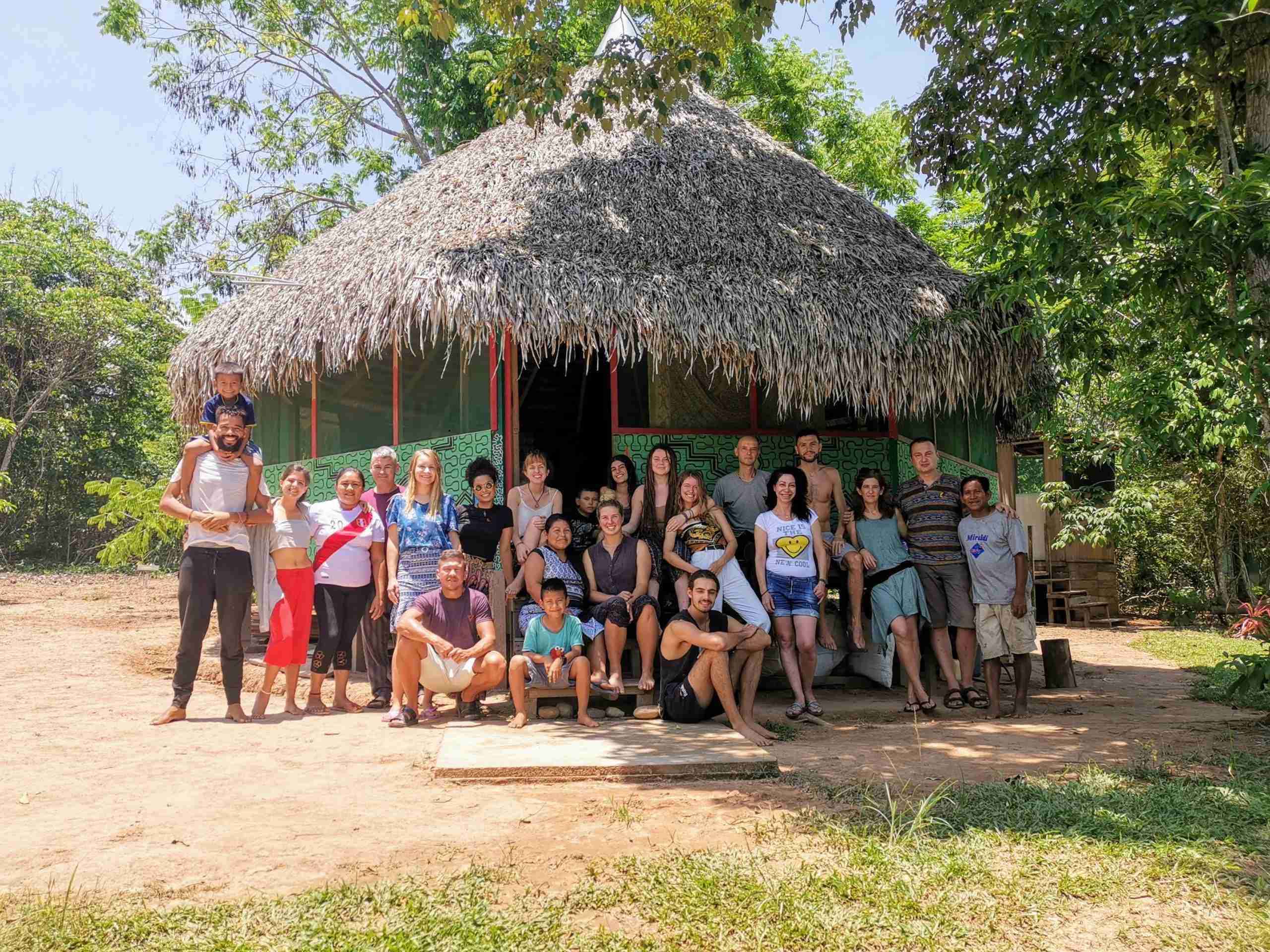
Mai Niti is a small, family-run Shipibo healing center near Pucallpa in the Peruvian Amazon, led by Maestra Lucila alongside her father, Maestro Leonardo, and her brothers. Guests come from all over the world for stays from five days to several months, and you can read what past guests say about their time with us.
If you're weighing up whether to travel, the best first step is a conversation. Peter Couch, our lead facilitator, runs a free discovery call where you can ask about the center, preparation, medications and screening, and what to expect when you arrive.
What to eat, what to avoid and simple recipes.
What the research says about risk factors.
Mental, physical and practical readiness.
A step-by-step guide to your stay.
Questions about travelling to Mai Niti? Ask Peter on a free call.
No, not for the general public. DMT is a federal Schedule I substance. A small number of churches, including the União do Vegetal and some Santo Daime churches, have legal exemptions to use ayahuasca as a sacrament.
No state has legalised it. Colorado has removed state penalties for personal possession and use of DMT by adults 21 and over, and some cities have made it a low enforcement priority, but federal law still applies everywhere.
No. It's treated as a preparation of DMT, which is a Class A drug. UK courts have rejected religious freedom as a defence.
No, except for a few religious groups that hold section 56 exemptions from Health Canada. DMT, harmaline and harmalol are all Schedule III controlled substances.
Yes. Traditional ayahuasca use was declared part of Peru's National Cultural Heritage in 2008, and ceremonies are legal.
In the US and Canada, the Banisteriopsis caapi vine and Psychotria viridis leaves aren't controlled as plants. Preparing them into a brew containing DMT is where the law comes in. In the UK, the brew is treated as a Class A preparation.
Only for that church, and only if it has a court ruling, settlement or DEA exemption (US) or a section 56 exemption (Canada). Calling a retreat a church doesn't make it legal. There's no religious exemption in the UK.
No. Bringing it into the US, UK or Canada counts as importing a controlled substance, which is a serious offence.
Travelling to take part in a legal ceremony abroad isn't generally an offence in the US, UK or Canada, since drug possession laws apply within each country. If you have specific concerns, for example because of your job or a security clearance, speak to a lawyer.
Laws vary widely. Some countries, including Peru and Brazil, allow traditional or religious use of ayahuasca. DMT as a pure, extracted drug remains controlled almost everywhere.
Not unless they operate under one of the federal religious exemptions. Retreats that serve ayahuasca outside those exemptions are operating illegally under federal law, whatever they call themselves.
Check your inbox for our e-mail.
If you don’t see anything in your inbox, check your updates folder. We will be in touch!